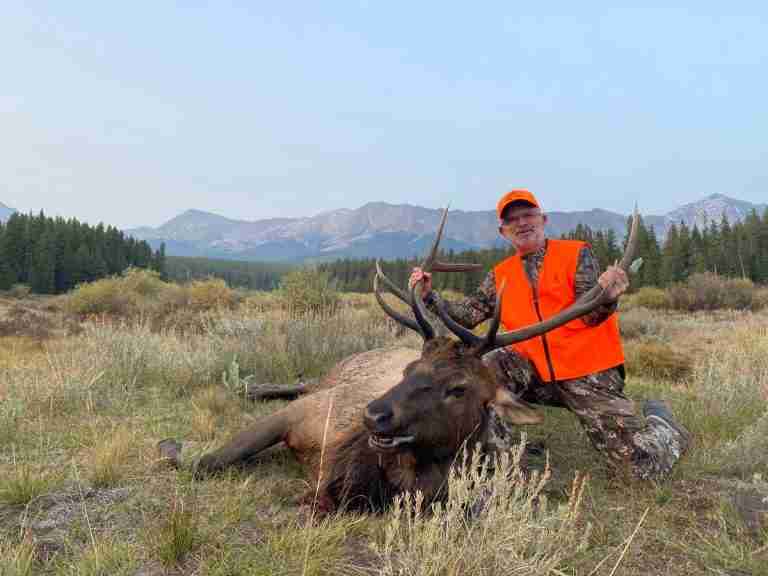
Choosing the right caliber for elk hunting is one of the most debated topics in hunting camps across the West. Every hunter has an opinion, and half of them are wrong. Here’s the truth: elk are tough, rugged animals that can absorb a marginal hit and cover miles of mountain terrain before going down. Your caliber choice matters — maybe not as much as shot placement, but it’s not something to gamble on either.
We’ve helped hunters book hundreds of guided elk hunts through Western Obsessions, and we’ve seen what works in the field — not just on paper. This is our honest, no-BS breakdown of the best calibers for elk hunting in 2026.
What Makes a Good Elk Caliber?
Before we rank specific cartridges, let’s get clear on what elk demand from a rifle round:
- Minimum 1,500 ft-lbs of energy at impact — Elk are 600-1,000 lb animals. You need enough energy to break through thick hide, heavy bone, and dense muscle to reach vitals.
- Controlled expansion with deep penetration — You want a bullet that opens up but doesn’t fragment on a shoulder blade. Premium bullets like Nosler Partition, Barnes TTSX, or Federal Terminal Ascent are your friends here.
- Effective range for YOUR shooting ability — Not what YouTube says you can do. What YOU can consistently do from field positions, breathing hard, at altitude.
- Manageable recoil — A magnum you flinch behind is worse than a standard cartridge you shoot well.
With that framework, let’s get into the rankings.
1. .300 Win Mag — The Gold Standard
Our #1 recommendation for elk hunting. Period.
The .300 Winchester Magnum has been dropping elk since 1963, and there’s a reason it’s still the most popular elk cartridge in the West. It pushes a 180-grain bullet at around 2,960 fps, delivering over 1,800 ft-lbs of energy at 400 yards. That’s serious terminal performance at real-world hunting distances.
What makes the .300 Win Mag so good for elk:
- Flat trajectory out to 500+ yards
- Devastating terminal energy — elk rarely go far with a solid hit
- Ammo is available literally everywhere, from Walmart to the most remote sporting goods store in Montana
- Huge selection of premium hunting bullets
- Every major rifle manufacturer chambers for it
The only downside? Recoil. The .300 Win Mag kicks noticeably harder than a .30-06 or 7mm Rem Mag. If you’re recoil-sensitive, you’ll need to practice enough that you don’t develop a flinch. A good muzzle brake helps a lot.
Bottom line: If you’re buying one rifle for elk hunting and you can handle the recoil, get a .300 Win Mag. You’ll never wonder if your gun is “enough.”
We see this cartridge perform on the Colorado guided elk hunts we book more than any other — and the results speak for themselves.
2. 7mm Rem Mag — The Smart Choice
The 7mm Remington Magnum is the caliber we recommend to hunters who want magnum performance without magnum punishment. It’s been quietly outperforming its reputation since 1962.
With a 160-175 grain bullet, the 7mm Rem Mag shoots flatter than the .300 Win Mag and produces about 15-20% less recoil. At 400 yards, you’re still delivering around 1,600 ft-lbs of energy with a 162-grain ELD-X — plenty for elk.
Why the 7mm Rem Mag deserves serious consideration:
- Less recoil = better shooting — Most hunters shoot the 7mm more accurately than the .300 Win Mag
- Superior ballistic coefficient with modern 7mm bullets
- Flatter trajectory, less wind drift
- Ammo is widely available (not as ubiquitous as .300 Win Mag, but close)
- Excellent for longer-range mountain hunting
The argument against it? Slightly less energy on impact compared to the .300 Win Mag. In practice, with good shot placement and premium bullets, elk can’t tell the difference.
Bottom line: If recoil matters to you, or you expect longer shots in open country, the 7mm Rem Mag is the play. It’s killed more elk than most people realize.
Hunters heading out on the New Mexico elk hunts we book — where shots can stretch across wide mesas — often favor the 7mm for exactly this reason.
3. .30-06 Springfield — The Proven Classic
The .30-06 has been killing elk since before your grandfather was born. It’s been a military cartridge, a target cartridge, and a hunting cartridge for over 120 years. There’s nothing it can’t do.
With modern 180-grain premium bullets at 2,700 fps, the .30-06 is absolutely adequate for elk out to 350-400 yards. Is it as flat-shooting as the magnums? No. Does it hit as hard at distance? No. But inside 400 yards — where the vast majority of elk are taken — it gets the job done with less recoil, less muzzle blast, and cheaper ammo.
Why the .30-06 still belongs in this conversation:
- Ammo is the cheapest and most available of any cartridge on this list
- Mild recoil (compared to magnums) makes it easy to shoot well
- Lighter rifles are possible since you don’t need a magnum-length action
- Incredibly versatile — elk, deer, moose, bear, everything
- More than enough power inside 400 yards with proper bullets
Bottom line: If you already own a .30-06, don’t let anyone tell you it’s not enough for elk. Load it with 180-grain Nosler Partitions or Barnes TTSX and go hunting. The elk won’t know the difference between your .30-06 and a .300 Win Mag — as long as you put the bullet where it counts.
Check out our best hunting rifles for 2026 guide for specific rifle recommendations in these calibers.
4. 6.5 Creedmoor — The Controversial Pick
Here’s where we’re going to upset some people on both sides.
The 6.5 Creedmoor is NOT our top recommendation for elk. But it CAN work — with significant caveats. And we’re tired of the internet pretending it’s either the greatest cartridge ever made or completely useless for anything bigger than a coyote.
Here’s the reality: a 143-grain ELD-X at 2,700 fps delivers about 1,200 ft-lbs at 400 yards. That’s below our 1,500 ft-lb threshold. At 200 yards? About 1,500 ft-lbs — right at the line. So the 6.5 Creedmoor is marginal for elk, and “marginal” is not where you want to be on an animal this tough.
When the 6.5 Creedmoor works on elk:
- Shots inside 300 yards
- Perfect broadside shot placement — double lung or heart
- Premium controlled-expansion bullets (140-147 grain)
- A shooter who is VERY confident in their ability to place that shot under pressure
When it doesn’t work:
- Quartering-to shots where you need to punch through shoulder
- Shots beyond 350 yards where energy drops below reliable thresholds
- Bad angles, less-than-perfect shots — the margin for error is razor thin
Bottom line: Can you kill elk with a 6.5 Creedmoor? Yes. Should you choose it as your primary elk cartridge? No. If it’s the only rifle you have and your budget doesn’t allow another gun, use premium bullets, keep your shots inside 300 yards, and wait for a perfect broadside. But if you’re buying a rifle specifically for elk hunting, pick something with more energy.
For more on this debate, check out our breakdown of 3 rifle calibers for elk that we’ve tested extensively.
5. .338 Win Mag — The Elk Hammer
The .338 Winchester Magnum is overkill for most elk hunting situations. And we mean that as a compliment — sort of.
Pushing a 225-grain bullet at 2,800 fps, the .338 Win Mag hits like a freight train. At 300 yards, you’re still delivering over 2,400 ft-lbs of energy. Elk hit with a .338 tend to not go anywhere. It’s the closest thing to a guaranteed one-shot stop on elk-sized game.
Where the .338 shines:
- Thick timber hunting — when shots are close and you might need to punch through brush or heavy bone at steep angles
- Bad angle shots — when the elk isn’t perfectly broadside and you need deep penetration through the shoulder
- Big bulls — mature bulls in the 800-1,000 lb range are built different. Extra energy is welcome.
- Confidence — if you shoot it well, there’s a psychological advantage to knowing your rifle will absolutely crush anything you hit
The downside is brutal recoil. We’re talking 35+ ft-lbs of recoil energy in a standard-weight rifle. Many hunters simply cannot shoot the .338 accurately without developing a flinch. And a flinch-induced miss is worse than a well-placed shot from a lighter caliber. Every time.
Bottom line: If you’re hunting thick timber where shots are under 200 yards, and you can handle the recoil, the .338 Win Mag is devastating. But for the average elk hunter taking 200-400 yard shots in mountain terrain, it’s more gun than you need. The horseback elk hunts in Colorado we book often put you in thick timber where the .338 crowd has a point.
6. .28 Nosler & 7mm PRC — The New Kids
The .28 Nosler and 7mm PRC represent the next generation of elk cartridges, and they’re gaining popularity fast — especially among hunters who want long-range performance without stepping up to a .300 Win Mag.
The .28 Nosler is essentially a 7mm Rem Mag on steroids. It pushes the same 175-grain bullets 200-300 fps faster, extending effective range and delivering more energy downrange. The catch? Barrel life is shorter (maybe 800-1,200 rounds), ammo is expensive and harder to find, and recoil is stout.
The 7mm PRC is Hornady’s answer to the “modern 7mm” question. It’s designed from the ground up for heavy, high-BC 7mm bullets (175-180 grain), fits in a standard long action, and offers factory ammo that’s actually optimized for the cartridge. Think of it as a 7mm Rem Mag with better brass, better accuracy potential, and slightly higher velocity.
Both cartridges are excellent for elk. The 7mm PRC in particular is positioning itself as a potential successor to the 7mm Rem Mag — same concept, better execution.
Bottom line: If you’re buying a new rifle and want cutting-edge performance, the 7mm PRC is worth serious consideration. The .28 Nosler is a barrel-burner that’s best for dedicated elk/western hunters who reload. Neither is a bad choice, but ammo availability still favors the established cartridges.
7. Honorable Mentions: .270 Win & .308 Win
.270 Winchester
Jack O’Connor’s favorite cartridge has killed a mountain of elk. A 150-grain bullet at 2,850 fps is adequate for elk inside 350 yards. It’s light-recoiling, flat-shooting, and fun to carry in the mountains. Our concern? It’s on the light end of “adequate.” Like the 6.5 Creedmoor, it demands perfect shot placement. But unlike the Creedmoor, it has decades of proven elk kills behind it. If you shoot a .270 well, you can absolutely hunt elk with it.
.308 Winchester
The .308 is basically a .30-06 in a short action with slightly less velocity. It’s a great deer cartridge that can work on elk inside 300 yards with 180-grain premium bullets. Is it ideal? No. But if it’s what you’ve got, load it with 180-grain Barnes TTSX and keep your shots reasonable.
Want to see all our top rifle picks? Check out our best hunting rifles for 2026 roundup.
Quick Comparison: Elk Calibers at a Glance
| Caliber | Best For | Effective Range | Recoil | Our Rating |
|---|---|---|---|---|
| .300 Win Mag | All-around elk | 500+ yards | Heavy | ⭐ Best Overall |
| 7mm Rem Mag | Long-range mountain | 500+ yards | Moderate-Heavy | ⭐ Best Value |
| .30-06 Springfield | Versatility | 400 yards | Moderate | ⭐ Most Versatile |
| 6.5 Creedmoor | Experienced shooters only | 300 yards (on elk) | Light | Adequate* |
| .338 Win Mag | Thick timber, big bulls | 400 yards | Very Heavy | Specialized |
| 7mm PRC | Modern long-range | 500+ yards | Moderate-Heavy | Rising Star |
| .28 Nosler | Dedicated western hunter | 600+ yards | Heavy | Niche Pick |
What About Bullet Selection?
Here’s something most caliber articles skip: your bullet choice matters as much as your caliber choice. A .300 Win Mag loaded with cheap cup-and-core bullets will perform worse on elk than a .30-06 loaded with Barnes TTSX.
For elk, you want bonded or monolithic bullets designed for controlled expansion and deep penetration:
- Barnes TTSX / LRX — copper monolithic, 100% weight retention, devastating wound channels
- Nosler Partition — the original premium bullet, dual-core design never fails
- Nosler AccuBond — bonded jacket, great BC, reliable expansion
- Federal Terminal Ascent — designed for variable range, excellent on elk
- Hornady ELD-X — high BC for long range, but can fragment on close heavy-bone hits — keep that in mind
- Swift A-Frame — tank of a bullet, unmatched penetration
Avoid lightweight varmint bullets, standard cup-and-core bullets, and anything labeled “target” or “match” for elk hunting. You need a bullet built for big game.
Browse our gear shop for hunting essentials to round out your elk setup.
Our Recommendation: What Should YOU Shoot?
Here’s our honest advice based on helping hunters book hundreds of guided elk hunts:
- First elk hunt, buying a new rifle? → .300 Win Mag or 7mm Rem Mag. Either one. You won’t regret it.
- Already own a .30-06 or .270? → Hunt with what you have. Buy premium bullets and practice.
- Recoil-sensitive? → 7mm Rem Mag with a good muzzle brake. Or the 7mm PRC if you want something modern.
- Hunting thick timber under 200 yards? → .338 Win Mag if you can handle it. .300 Win Mag if you can’t.
- Long-range mountain hunting? → 7mm Rem Mag, .28 Nosler, or 7mm PRC.
- Budget-conscious? → .30-06 all day. Cheapest ammo, most available, totally capable.
The absolute worst thing you can do is buy a magnum you’re afraid to shoot. Recoil anticipation ruins more elk shots than inadequate caliber choice. Pick the most powerful cartridge you can shoot accurately and confidently. That’s your elk caliber.
Ready to Book Your Elk Hunt?
Now that you know what to shoot, the next step is getting out there. We connect hunters with top-tier guided elk hunts across some of the best elk country in the West:
- Colorado Guided Elk Hunting — Premium guided hunts, $7,500
- Southern Colorado Elk Hunting — Great success rates, $6,900
- Horseback Colorado Elk — Deep backcountry access, $5,500
- New Mexico Elk Hunting — Trophy bulls, $14,500
Browse all the guided elk hunts we offer or contact us today to talk with a real hunting consultant about which hunt — and which caliber — is right for you.
Frequently Asked Questions
What is the best all-around caliber for elk hunting?
The .300 Winchester Magnum is widely considered the best all-around elk caliber. It delivers excellent energy at long range, ammo is available everywhere, and every major rifle manufacturer offers it. The 7mm Remington Magnum is a close second with less recoil and flatter trajectory.
Is 6.5 Creedmoor enough for elk?
The 6.5 Creedmoor can take elk, but it’s marginal. You need premium 140+ grain bullets, perfect broadside shot placement, and should keep shots inside 300 yards. It’s not our recommendation for a dedicated elk caliber — there are better options with more margin for error.
What is the minimum caliber for elk hunting?
Most states require a minimum of .24 caliber (6mm) for elk, but we strongly recommend .270 Winchester or larger. Energy-wise, you want at least 1,500 ft-lbs at your expected shooting distance. The .270 Win, .308 Win, and .30-06 are the smallest calibers we’d recommend with confidence.
Is .30-06 good enough for elk?
Absolutely. The .30-06 Springfield has been taking elk for over a century. With modern 180-grain premium bullets like Nosler Partition or Barnes TTSX, it’s more than adequate inside 400 yards. It won’t reach out as far as the magnums, but most elk are shot well within its effective range.
What caliber do most elk guides carry?
Most elk guides we work with carry either a .300 Win Mag or a 7mm Rem Mag. These two calibers dominate the guide world because they offer the best combination of range, power, and versatility for the variety of situations you encounter in elk country.
Should I get a .300 Win Mag or 7mm Rem Mag for elk?
Both are excellent. Choose the .300 Win Mag if you want maximum energy and don’t mind heavier recoil. Choose the 7mm Rem Mag if you want flatter trajectory, less recoil, and plan to take longer shots. You can’t go wrong either way — the difference on elk is negligible with proper shot placement.
Is .338 Win Mag overkill for elk?
For most elk hunting situations, yes — the .338 Win Mag is more gun than needed. But “overkill” isn’t always bad. In thick timber with close-range shots and steep angles, the extra power of the .338 provides insurance. The trade-off is significantly more recoil, which hurts accuracy for many shooters.
This guide is part of our complete resource on Colorado elk hunting.