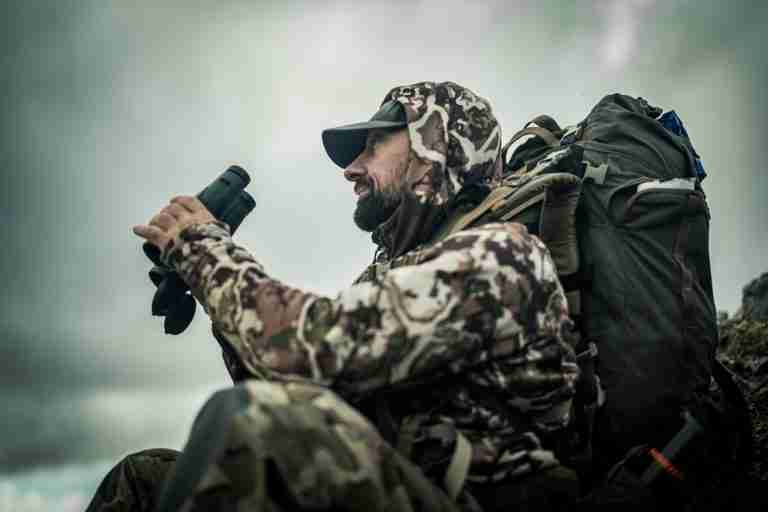
I’m going to tell you something that goes against what most elk hunters believe: if you want to kill the herd bull, stop calling to him.
I know that’s not what you hear on YouTube. Every elk hunting video has some guy ripping challenge bugles at 100 yards and the bull comes screaming in. That happens. But if you’re consistently trying to kill mature herd bulls — the ones running 15 to 30 cows — calling is one of the worst things you can do.
I killed a herd bull last season in a Colorado draw unit using this exact strategy. It took me two or three stalks on the same herd before I got close enough for the shot. And the reason I got multiple opportunities? I never let them know I was there.
Here’s how I do it.
Step 1: Locate the Herd — Then Shut Up
The only time I use an elk call is to locate the herd. One locator bugle from a long way out — bare minimum, a thousand yards. I want to know where the herd bull is. That’s it. Once I get a response and I know his general location, the call goes away and it doesn’t come back out.
This is much easier during the times of day when bulls are naturally vocal — early mornings and late evenings, right before dark. If a bull is already fired up and bugling on his own, you might not even need the locator. Just listen.
Step 2: Read the Herd
Once I’ve located the herd, the next thing I need to figure out is what they’re doing. This is the step most hunters skip because they’re too excited to close the distance.
Slow down. Watch. Ask yourself:
- Are they feeding out into open areas in the evening?
- Are they moving into timber late morning to bed down?
- What direction are they traveling?
- Where are they headed?
Understanding what the herd is trying to do and where they’re going is everything. It tells you where to be.
Step 3: Get in Front of Them
Once I know the herd’s pattern and direction, I move into an ambush position. I’m not chasing them. I’m getting ahead of them so they come to me.
This is where the strategy separates from what most guys do. Most hunters locate a bull, get excited, and start closing straight at him while ripping cow calls or challenge bugles. Here’s what happens next:
- The herd bull moves his cows away. Bulls don’t want to fight if they can avoid it. If a herd bull can move his cows away from a threat without engaging, he’ll do that first — every time.
- The cows help him leave. Cows don’t want their herd bull running off to fight either. When you start bugling at a herd bull, the cows will often move away on their own. Now the whole herd is leaving.
Every time you call, you’re giving them a reason to move. Every time you stay silent, you stay undetected — and that gives you more than one chance.
Step 4: Close the Distance Slowly
Getting within 150 to 200 yards of the herd is typically not that hard. Elk are big, they’re noisy, and if you’re downwind, you can close ground pretty quickly.
The hard part is going from 200 yards to bow range. That’s where it gets real.
At 200 yards, my movement slows way down. I stay covered in timber and trees, and I move very slowly when I do need to move. A herd of 15-plus cows has a lot of eyes that can pick up movement. That’s exactly why getting out in front of them matters — you want them moving to you so you can limit your own movement.
If you can get within range of the cows, the herd bull will come to you. He’s constantly circling, checking his cows, keeping them together. If you’re patient and you wait near the cows, you will get a shot opportunity. It might be five minutes. It might be two hours. But he’ll come around.
Step 5: Win the Wind Game
None of this works if you lose the wind. If you’re closing in on a herd, you have to be certain the wind is moving in the right direction. One bad gust and it’s over.
But wind isn’t the only thing you need to worry about. Thermals are what kill most stalks.
Here’s how thermals work in the mountains:
- Early morning: Thermals are falling — cold air sinks down the mountain. Your scent is moving downhill.
- Late morning: As the sun heats the ground, thermals switch. They start rising up the mountain. This is the danger zone — if you set up below a herd expecting downhill thermals and they flip, you’re done.
- Evening: As it cools off, thermals switch again and start falling back down the mountain.
You have to know when that switch is coming. If you’re not paying attention to thermals, you’ll blow more stalks than bad shooting ever will.
Why This Strategy Works Better Than Calling
When I killed my herd bull last season in Colorado, it took two or three stalks on the same herd before I got the shot. That’s the biggest advantage of this approach — being silent and undetected gives you multiple opportunities. If your first stalk doesn’t work out, the herd doesn’t know you’re there. You can back out, reposition, and try again.
If you’re bugling and cow calling the whole time? That herd is gone after one failed attempt. Probably gone before you even get close.
When I finally got the shot, I was set up in a natural position behind cover and the bull came around to check his cows. That’s how it works. You don’t call him in. You let the cows hold him there, and you let him come to you on his own schedule.
Standing is always best for the shot if you can manage it, but sometimes you’re tucked behind a tree or a natural blind and you have to take it from your knees. Whatever position you end up in, make sure you’re comfortable before the moment comes. You might be holding that position for a while.
The Bottom Line
Every hunter I talk to wants to call in the herd bull. I get it — it’s exciting, it’s what you see on TV, and when it works, it’s the greatest experience in hunting. But in my experience, it works far less often than most people think.
The herd bull didn’t get to be the herd bull by running toward every bugle he hears. He got there by being smart. Hunt him like he’s smart.
Locate the herd. Read their behavior. Get in front of them. Go silent. Be patient. Let the bull come to you.
That’s how you kill the herd bull.
Ready to Chase a Herd Bull This Fall?
We work with outfitters across Colorado, Montana, and New Mexico who put hunters on big bulls every season. Whether you’re looking for a guided archery elk hunt or a DIY drop camp, our team can help you find the right hunt for your goals.
Talk to a hunting consultant and start planning your 2026 archery season.