
New Mexico Hunting Trips: The Complete Guide to Hunting the Land of Enchantment
New Mexico doesn’t get the same hype as Colorado or Montana in the hunting world. And honestly? That’s part of what makes it so good. While everyone else is stacking preference points and fighting for crowded public land tags in more “popular” western states, New Mexico is quietly producing some of the best elk, mule deer, and trophy pronghorn hunting in North America — with a tag system that actually lets you hunt.
Here’s the deal: New Mexico uses a true lottery draw with no preference points for most big game species. That means a first-time applicant has the same odds as someone who’s been applying for ten years. And if you go the guided route with a landowner tag, you can skip the draw entirely and hunt some of the most exclusive private land in the West.
Whether you’re chasing a 350-class bull elk on a sprawling southern ranch, glassing for trophy mule deer in the Gila, or looking for the most affordable oryx hunt on the planet, New Mexico has something that’ll make you wonder why you haven’t been hunting here all along.
Why Hunt New Mexico?
Every western state has elk. Every western state has mule deer. So what makes New Mexico different? A few things — and they matter more than you’d think.
Private Land Access and Landowner Tags
This is the big one. New Mexico has a landowner tag system that’s unlike anything else in the West. Large ranches receive elk and deer tags based on their acreage and wildlife populations. When you book a guided hunt on private land, your outfitter secures one of these landowner tags for you. No draw. No waiting. No hoping your number comes up. You book the hunt, you get the tag, you go hunting.
And these aren’t throwaway tags on marginal land. We’re talking about massive private ranches — 50,000 to 200,000+ acres — with limited hunting pressure, healthy herds, and genetics that produce true trophy-class animals. Some of these ranches have been managed for big game for decades, and the results speak for themselves.
No Preference Point System
Unlike Colorado, Wyoming, and Montana, New Mexico doesn’t use preference points for most of its big game draws. It’s a straight lottery. Everyone gets the same shot every year. That’s great news if you’re just getting into western hunting and don’t have years of points banked. It also means you could draw a premium unit tag on your very first application — it happens every year.
Species Diversity
New Mexico might have the most diverse big game hunting in the lower 48. You can chase elk, mule deer, pronghorn, black bear, Coues deer, aoudad (Barbary sheep), oryx, turkey, javelina, and mountain lion — all in one state. Try doing that in Montana.
The oryx and aoudad hunts are particularly unique. New Mexico is the only state in the country where you can hunt free-range African oryx on public land — a leftover population from a 1960s game introduction on White Sands Missile Range that has thrived in the desert. It’s one of the most affordable and unusual hunts in North America.
Weather and Terrain
If you’ve ever sat in a Montana treestand in November wondering why you didn’t bring a third pair of gloves, New Mexico will feel like a vacation. Hunting season temps in September and October are typically in the 50s-70s at elevation, and even late-season hunts in November and December are milder than most western states. You’re still in the mountains — elevations range from 6,000 to 10,000+ feet — but you’re not fighting brutal cold on top of everything else.
The terrain is also gorgeous in a way that surprises people. Most folks picture flat desert, but New Mexico’s hunting country includes thick alpine timber, aspen groves, deep canyons, vast grasslands, and rugged mountain ranges. It’s some of the most beautiful hunting landscape in the West.
What Can You Hunt in New Mexico?
New Mexico’s species list reads like a western hunter’s bucket list. Here’s what’s available and what makes each one worth pursuing.
Rocky Mountain Elk
New Mexico is a sleeper for trophy elk. The state consistently produces bulls in the 330-380+ class, with a handful of absolute giants taken every year. The best units — like 15, 16A, 16B, 34, and 36 — hold elk that rival anything coming out of Arizona or Colorado’s top units. The difference? You can actually get a tag, especially through the landowner system on private ranches.
Our New Mexico elk hunting trip puts you on exclusive private land with landowner tags, experienced guides, and access to country that very few hunters ever see.
Mule Deer
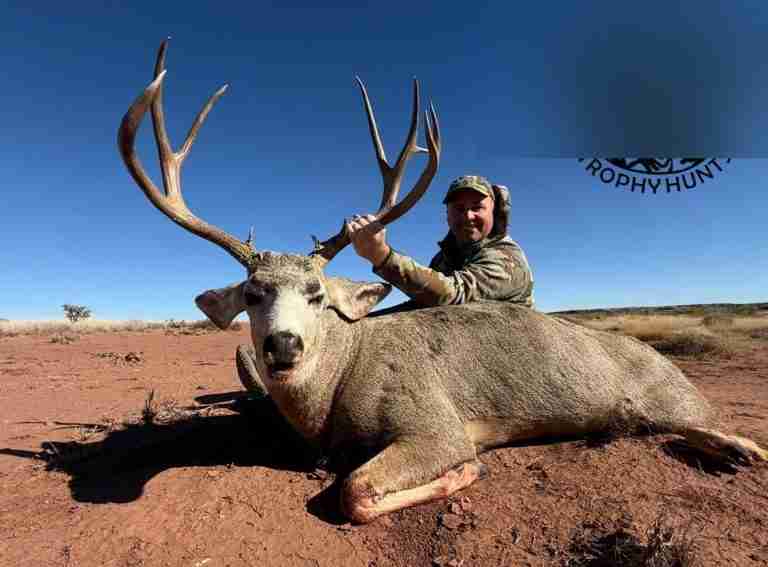
New Mexico’s mule deer hunting has been on an upswing. The best units in the northern and western parts of the state are producing bucks in the 180-200+ class regularly. The Gila region and units along the Colorado border are particularly strong. Like elk, landowner tags on private ranches give you access to deer that have minimal hunting pressure.
Pronghorn
The eastern plains of New Mexico hold excellent pronghorn numbers, and draw odds are more favorable than most hunters realize. If you’re looking for a trophy speed goat, the wide-open grasslands east of the mountains are your spot. Pronghorn hunts are also one of the most affordable western hunts you can book — great for a first western trip or a father-son hunt.
Oryx
This is New Mexico’s most unique hunt. Free-range gemsbok oryx roaming the Chihuahuan Desert — an animal that looks like it belongs on the African savanna but is thriving in southern New Mexico. Public land oryx hunts through the draw are extremely affordable (under $200 for the tag), though draw odds in the most popular units can be tough. Guided hunts on private land with landowner tags are also available. Either way, it’s an experience you literally cannot get anywhere else in the country.
Aoudad (Barbary Sheep)
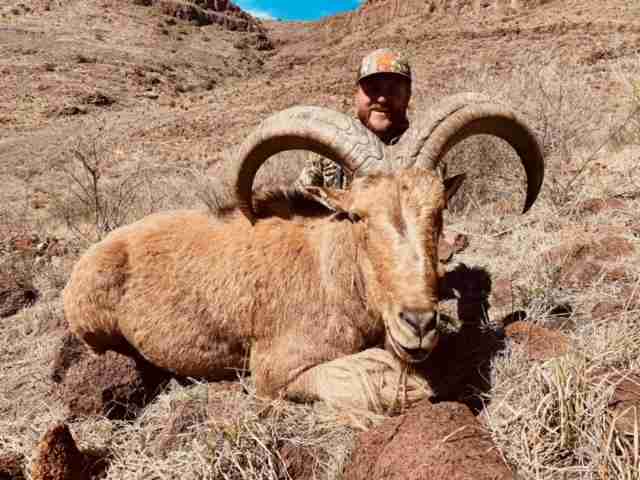
Another exotic species that’s found a permanent home in New Mexico’s desert mountains. Aoudad are tough, wary animals that live in the roughest, steepest terrain they can find. Hunting them is physically demanding but incredibly rewarding. The Canadian River breaks and the mountains of southern New Mexico hold good populations, and tags are available through the draw and on private land.
Black Bear
New Mexico has a healthy black bear population, particularly in the Gila, Sangre de Cristo, and Sacramento Mountains. Bear hunts can be combined with elk or deer hunts in many areas, making it a great add-on species. The state uses both spring and fall seasons, with over-the-counter tags available in many units.
Coues Deer
The Grey Ghost. Coues deer are a subspecies of whitetail found in the mountains and canyons of southwestern New Mexico and southeastern Arizona. They’re small-bodied but incredibly challenging to hunt — you’ll spend hours behind your binoculars glassing rocky hillsides for a deer that weighs 100 pounds and can vanish into a shadow. If you love the challenge of spot-and-stalk hunting at its hardest, Coues deer hunting is addictive.
Turkey
Merriam’s turkeys are found throughout New Mexico’s mountain ranges, and the spring gobbler season is excellent. The Gila, Sacramento, and Sangre de Cristo Mountains all hold good turkey populations. It’s a great trip to combine with early-season scouting for fall big game hunts.
Understanding the New Mexico Tag System
New Mexico’s tag system can be confusing if you’re used to other western states. Here’s how it actually works.
Draw Tags (Public Land)
New Mexico runs an annual big game draw, usually with applications due in March. It’s a true lottery — no preference points, no bonus points, no weighted system. Every applicant has the same chance. The upside is that first-time applicants regularly draw premium tags. The downside is there’s no way to “build up” your odds over time. You apply, and you either draw or you don’t.
Draw fees are reasonable: the application fee is around $10, plus the tag fee if you draw (varies by species — about $550 for non-resident elk, $260 for deer, $160 for pronghorn).
Landowner Tags (EPLUS System)
This is how most guided hunts in New Mexico work. The state’s Elk Private Land Use System (EPLUS) allocates tags to qualifying private landowners based on their property’s elk habitat. Similar programs exist for deer and pronghorn. Landowners can use these tags themselves or transfer them to hunters — which is what outfitters do.
When you book a guided New Mexico elk hunt on private land, your outfitter handles the tag. You don’t need to enter the draw. The tag is valid for the specific ranch and season, and it gives you access to private land that’s off-limits to draw tag holders.
Landowner tags typically cost more than draw tags — that cost is built into the guided hunt price — but the certainty and the quality of the hunting make it worth every penny for most hunters.
Over-the-Counter Tags
A few species in New Mexico have over-the-counter tags, meaning you can buy them without entering a draw. Bear, mountain lion, javelina, and some turkey seasons fall into this category. These make great add-on hunts or standalone trips without any draw uncertainty.
Best Regions for Hunting in New Mexico
New Mexico is a big state with wildly different terrain from north to south. Here are the regions that produce the best hunting.
The Gila (Southwest)
The Gila National Forest and surrounding wilderness is the crown jewel of New Mexico hunting. Over 3 million acres of rugged, remote mountain country with excellent elk, mule deer, bear, turkey, and Coues deer populations. This is wild country — think deep canyons, thick timber, and very few people. Units 15, 16A, 16B, and 23 are among the most sought-after elk units in the state.
Sacramento Mountains (South-Central)
The Sacramento range — including the Lincoln National Forest and areas around Cloudcroft and Ruidoso — holds strong elk and mule deer herds. Units 34 and 36 are premium elk country with both public land draw tags and private land opportunities. The terrain is more accessible than the Gila but still rugged enough to hold quality animals.
Sangre de Cristo Mountains (North)
The southern end of the Rocky Mountains cuts through northern New Mexico, creating high-elevation elk and mule deer habitat. The area around Pecos, Taos, and the Valle Vidal holds excellent herds. Units 45, 50, and 51 are popular for elk, while the surrounding private ranches offer some of the best landowner tag opportunities in the state.
Eastern Plains
Flat, wide-open grassland that’s home to New Mexico’s best pronghorn hunting. This is speed goat country — you’ll glass for miles across rolling prairie. The eastern plains also hold some surprisingly good mule deer, especially along the breaks and draws of the Canadian River and Pecos River systems.
New Mexico Guided Hunt Costs: What to Budget
New Mexico hunts span a wide range depending on species, land type, and whether you’re hunting draw or landowner tags. Here’s what guided hunts actually cost in 2026:
| Hunt Type | Species | Price Range | Duration |
|---|---|---|---|
| Private Land (Landowner Tag) | Elk | $10,000 – $18,000 | 5-7 days |
| Public Land (Draw Tag) | Elk | $5,000 – $8,000 | 5-7 days |
| Private Land (Landowner Tag) | Mule Deer | $6,000 – $12,000 | 5-7 days |
| Guided | Pronghorn | $3,500 – $6,000 | 3-5 days |
| Guided | Oryx | $4,000 – $7,000 | 3-5 days |
| Guided | Aoudad | $4,500 – $7,500 | 4-6 days |
| Guided (Combo Elk/Bear) | Elk + Bear | $12,000 – $16,000 | 5-7 days |
Our New Mexico private land elk hunt starts at $14,500 and includes your landowner tag, 5 days of guided hunting on exclusive private ranch land, meals, lodging, and field care of your animal.
What’s Included in Most Guided New Mexico Hunts
- Professional guide services (typically 1 guide per 1-2 hunters)
- Landowner tag (for private land hunts — this is a major value since landowner tags alone can cost $2,000-$5,000+)
- Meals and lodging (ranch house, lodge, or cabin)
- Field dressing, skinning, and caping
- Transportation during the hunt (4×4 trucks, ATVs, or horseback depending on terrain)
- Trophy care and initial meat processing
What’s NOT Included (Budget for These)
- Non-resident hunting license: ~$160-$300 depending on species
- Flights: Fly into Albuquerque (ABQ) — $250-$600 depending on where you’re coming from
- Meat processing and shipping: $300-$700 depending on species and destination
- Taxidermy: $800-$2,500 for a shoulder mount
- Guide gratuity: 10-15% of hunt price is customary
- Rental vehicle: Some outfitters offer pickup from Albuquerque; others require you to drive to camp
Total out-of-pocket for a guided New Mexico elk hunt on private land: plan on $16,000-$22,000 all-in, including travel, tips, and meat processing. For draw tag hunts on public land, you can get in for $7,000-$12,000 all-in — if you draw.
Explore Our Elk & Western Hunts
New Mexico, Colorado, Montana, and Alberta — trophy elk hunting from $5,500.
What to Expect on a Guided New Mexico Hunt
If you’ve hunted out West before — Colorado, Montana, Wyoming — New Mexico will feel familiar but different in all the right ways. Here’s what a typical guided elk hunt on private land looks like.
Arriving at Camp
Most New Mexico outfitters ask you to arrive the afternoon or evening before your hunt starts. You’ll fly into Albuquerque and either drive or get picked up for the ride to camp. Depending on the ranch, “camp” might be a ranch house with real beds and a kitchen, or a comfortable wall tent setup in the backcountry. Either way, you’ll meet your guide, go over the game plan, and confirm your rifle is still zeroed after travel.
A Day in the Field
Early mornings. You’ll be up before first light and heading to a glassing point or a spot your guide has been watching. New Mexico elk hunting on private land is primarily spot-and-stalk — you’re covering ground in a truck or on foot, using binoculars and spotting scopes to locate bulls, then making a stalk.
During the September and early October archery seasons, calling can be deadly. New Mexico bulls are vocal during the rut, and the terrain — open meadows, scattered timber, canyon bottoms — is perfect for working a bugling bull into bow range.
Midday might involve relocating to a different part of the ranch, checking water holes, or sitting a vantage point where your guide has been seeing activity. Evening hunts focus on catching elk coming off their beds and heading to feed. In New Mexico, the warm temperatures mean elk often don’t move until the last 30 minutes of light — patience matters here.
After the Harvest
Your guide handles the field work — skinning, quartering, caping for a shoulder mount if you want one. Most ranch-based hunts have the advantage of vehicle access to get your animal out efficiently, which means less packing and faster meat care. Your outfitter will typically have a cooler or walk-in refrigerator at camp, and they can connect you with a local processor if you want your meat cut and shipped.
Physical Requirements
The good news: New Mexico guided hunts — especially private land hunts — are generally more accessible than backcountry hunts in states like Montana or Idaho. But don’t mistake “accessible” for “easy.”
- Private land elk hunts (Moderate): Expect to hike 3-6 miles per day at 6,000-9,000 feet elevation. Much of the hunting involves riding in a truck to glassing positions, then making stalks of a few hundred yards to a mile. You need to be comfortable walking on uneven terrain with a daypack and being on your feet for long days.
- Public land hunts (Moderate-High): More hiking, rougher terrain, less vehicle access. Plan for 5-10 miles per day in steep country, especially in the Gila and Sacramento Mountains.
- Pronghorn hunts (Low-Moderate): Mostly flat terrain with moderate walking. Spot-and-stalk pronghorn hunting requires crawling and low movement across open ground — your knees and elbows will remember it.
- Oryx and aoudad hunts (Moderate-High): Desert terrain with significant elevation changes. Heat can be a factor in early-season oryx hunts. Aoudad country is steep and rough — treat it like a mountain hunt.
Altitude is the factor most out-of-state hunters underestimate. If you’re coming from sea level, even 7,000 feet will have you breathing harder than usual. Arrive a day early if possible to acclimate, and start a cardio program at least 6-8 weeks before your hunt.
Best Time of Year by Species
New Mexico’s hunting seasons are spread across most of the year. Here’s when to plan for each species:
- Elk (Archery): September 1-24 — Peak of the rut. Bulls are bugling, responsive to calls, and actively chasing cows. This is the most exciting time to hunt elk in New Mexico. Warm days, cool nights.
- Elk (Muzzleloader): Late September – early October — Rut is winding down but bulls are still active. Great window for muzzleloader hunters.
- Elk (Rifle): October – November — Post-rut hunting. Bulls are in bachelor groups or recovering. Spot-and-stalk is the primary method. Cooler temps make for comfortable hunting.
- Mule Deer: October – November (rifle), September (archery) — The deer rut in New Mexico runs November through December, so late-season hunts can catch pre-rut activity. Early-season hunts catch bucks still in velvet or just stripped.
- Pronghorn: August – September — Early fall on the eastern plains. Warm weather, long days, and pronghorn in open country. One of the first western hunts of the year.
- Oryx: Year-round opportunities — Oryx can be hunted in various seasons throughout the year. Spring and fall are the most comfortable. Summer hunts are brutally hot but can be productive around water.
- Aoudad: February – March and year-round on private land — Late winter is a popular time, with cooler temperatures and aoudad concentrated in their preferred habitat.
- Bear: August – November (fall) and April – May (spring) — Fall bear hunts combine well with elk hunts. Spring hunts target bears coming out of hibernation near green-up areas.
- Turkey: April – May — Spring gobbler season. Merriam’s in the mountain forests.
For most hunters planning their first New Mexico trip, we recommend a September archery elk hunt or a late October rifle elk hunt. Both offer great hunting with pleasant weather and the best chance at a quality bull.
Our Elk & Western Hunts
We work with trusted outfitters across the West to offer elk hunts for every budget and experience level — from New Mexico private land to Colorado high country to the Alberta foothills.


Not sure which hunt is right for you? Talk to our team — we’ll match you with the right trip.
Frequently Asked Questions
Do I need preference points to hunt elk in New Mexico?
No. New Mexico does not use a preference point system for elk or most other big game species. It’s a straight lottery draw — every applicant has equal odds regardless of how many years they’ve applied. If you want guaranteed tag access, book a guided hunt on private land with a landowner tag and skip the draw entirely.
What’s the difference between a draw tag and a landowner tag?
A draw tag is issued through New Mexico’s annual lottery and allows you to hunt specific public land units during set seasons. A landowner tag (through the EPLUS system for elk) is allocated to qualifying private ranches and transferred to hunters who book guided hunts on that property. Landowner tags are guaranteed when you book with an outfitter — no draw required. The tradeoff is cost: guided private land hunts are more expensive, but you’re hunting exclusive land with less pressure and typically better animals.
When should I apply for the New Mexico draw?
Applications are typically due in mid-March for all big game species. Results are announced in late April or May. The application fee is around $10, plus the tag fee if you draw. Since there are no preference points, there’s no downside to applying every year — you might get lucky on your first try.
What caliber rifle should I bring for New Mexico elk?
Standard western elk calibers work great. The .300 Win Mag is the most popular choice, followed by 7mm Rem Mag, .30-06, and .28 Nosler. Shot distances in New Mexico can vary from 100 to 400+ yards depending on the terrain, so bring a rifle you can shoot accurately at range and practice out to at least 300 yards before your trip.
How physically demanding is a guided New Mexico elk hunt?
Private land hunts are moderate. You’ll use a truck to access glassing positions and then stalk on foot, typically covering 3-6 miles per day at 6,000-9,000 feet elevation. It’s less demanding than a backcountry Montana or Idaho elk hunt, but you still need to be able to hike hills, handle uneven terrain, and be on your feet for long days. Start a cardio program 6-8 weeks out if you’re not already active.
Can I hunt multiple species on one New Mexico trip?
Absolutely. Many hunters combine an elk hunt with a bear tag (over-the-counter in many units), or book separate hunts for elk and pronghorn during overlapping seasons. Some outfitters offer combo packages. Talk to our team about building a multi-species trip — it’s one of the best values in western hunting.
What’s the weather like during hunting season?
New Mexico hunting weather is generally milder than other western states. September elk hunts see daytime highs in the 60s-70s at elevation with cool mornings in the 30s-40s. October and November rifle seasons are cooler — 40s-60s during the day, with overnight temps occasionally dipping below freezing at higher elevations. Pack layers, a good rain jacket, and be prepared for afternoon thunderstorms in September.
Is New Mexico a good state for a first western hunt?
It’s one of the best. The landowner tag system means you can guarantee a tag without navigating preference points. The terrain and physical demands are moderate compared to more mountainous states. The weather is pleasant. And the species diversity means you can hunt everything from pronghorn on the plains to elk in the mountains to oryx in the desert — all in one state. If you’ve been wanting to hunt out West and don’t know where to start, New Mexico is a great answer.
Guided New Mexico Hunts





Ready to Hunt the Land of Enchantment?
Browse our New Mexico and western hunting trips — elk, mule deer, and more across the Rocky Mountain West.